Preparing your Melbourne home for summer is about more than buying a cooling device. A useful plan starts before a hot day arrives: check the forecast, manage sunlight and make sure your equipment is ready for the space you use most.
This guide gives you a practical routine for before, during and after a hot day, without assuming that one product can solve every cooling need.
Why a summer average is not a hot-day plan
The Bureau of Meteorology’s historical Melbourne Regional Office station (086071) lists January and February mean maximum temperatures of 25.9°C, based on the temperature record shown as 1855–2014.
That is a long-term average of daily maximum temperatures, not a ceiling on how hot an individual day can become. It also does not measure the temperature inside a sun-exposed bedroom or living room.
The station closed on 6 January 2015. Its figures, consulted on 8 October 2026, provide historical context rather than a current forecast. For daily decisions, check current Melbourne forecasts and warnings, and pay attention to conditions inside your home.
The day before: get your setup ready
Choose the room you want to prioritise. Think about sunlight, window coverings, access to suitable ventilation and where household members spend their time.
Check that blinds or curtains operate properly. Clear cooling equipment’s air inlets and outlets, and follow the manufacturer’s maintenance instructions. Avoid leaving cleaning, water-tank care or exhaust installation until the room is already uncomfortable.
For a portable refrigerated air conditioner, check the window kit, exhaust hose and drainage requirements. For a water-based personal cooler, check water-change, cooling-medium and ventilation instructions. Stop using equipment with damaged cords or visible faults.
In the morning: limit sunlight before heat builds
Close suitable window coverings before direct sunlight enters the rooms you want to keep comfortable. Move your desk or seating out of a sunbeam if practical.
Ventilate only when outdoor air is cooler than indoors and conditions are suitable. Consider air quality, security and the operating instructions for your cooling device. Opening every window is not always helpful when the air outside is hotter.
If your schedule allows, plan heat-producing tasks such as oven cooking for a cooler part of the day, or choose alternatives that add less heat indoors.
During the hottest part of the day: use cooling for its intended job
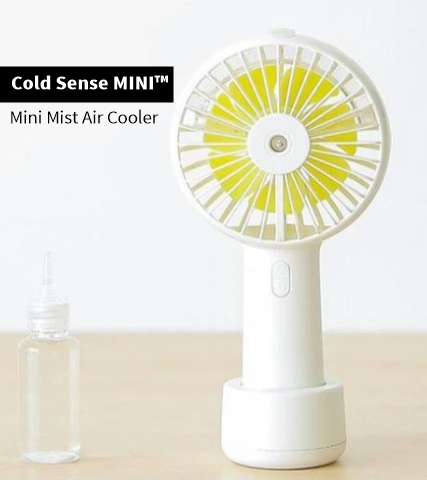
A fan provides airflow but does not refrigerate the room. Many compact water-based coolers use evaporation and are intended for nearby comfort. Their cooling effect depends on conditions, with evaporation generally working better in dry air than in humid air.
A refrigerated air conditioner removes heat and is the relevant category to consider when you want to lower the temperature across an enclosed room. Choose capacity appropriate to the space and follow installation instructions.
Do not treat “mini”, “portable” or “AC” as proof of a particular cooling technology. Check the specifications and distinguish personal comfort from whole-room temperature control.
Keep water-based devices away from electrical equipment, maintain the required clearances and avoid running cords across walkways. Take regular breaks and keep drinking water available.
In the evening: reassess before opening windows
Check the outdoor temperature rather than assuming the air is cooler because the sun has set. If outdoor air is cooler and air quality and security permit, suitable ventilation may help release accumulated indoor heat.
Keep following your equipment’s instructions. An evaporative cooler may need a different ventilation arrangement from refrigerated air conditioning.
Before using a device near a sleeping area, check its noise information and any instructions about overnight or unattended use. Make sure placement and cord routing remain safe when lights are off.
Make a separate plan for extreme heat
An everyday comfort routine is not a heat-safety plan. Follow local weather warnings and public-health advice, particularly if someone in your household may need additional support.
Identify a cooler place you can go if your home becomes unsafe, and consider what you would do if power is interrupted. Do not rely on a small personal cooler as your only protection during extreme heat.
Your Melbourne hot-day checklist
- Check the current forecast and warnings, not just seasonal averages.
- Prepare window coverings and cooling equipment before the hot day.
- Limit direct sunlight early.
- Ventilate according to actual conditions and device instructions.
- Choose equipment for nearby comfort or whole-room cooling, as required.
- Have an alternative cooler location available for unsafe conditions.
Build a routine that suits your home
Start with the room, the forecast and your daily routine. Shade and equipment maintenance are useful preparation, while the right cooling choice depends on your space and expectations.
Explore the Cold Sense range and check each model’s technology, intended use and care instructions before choosing an option for your Melbourne home.
Climate source: Bureau of Meteorology: Melbourne Regional Office monthly climate statistics, station 086071. Consulted 8 October 2026. This closed station’s historical averages are not live weather forecasts.