

Choosing cooling for a Sydney summer starts with a simple question: do you want to feel more comfortable where you sit, or lower the temperature throughout a room?
A compact device beside your desk and a portable air conditioner can serve very different purposes. Before comparing prices, take a closer look at your room, its humidity and the installation options available to you.
Use Sydney’s climate as context, not a guarantee
The Bureau of Meteorology’s historical Sydney Observatory Hill station (066062) lists a January mean maximum temperature of 26.0°C, based on its temperature record shown as 1859–2020. It also lists January mean relative humidity at 3 pm of 62%, based on a separate 1955–2010 record.
The station closed on 31 August 2020. These figures, consulted on 8 October 2026, are historical outdoor averages, not current weather forecasts. They do not describe every Sydney suburb or the conditions inside your home.
For cooling decisions, the useful lesson is to consider humidity alongside heat. Check the current forecast and, where possible, measure the temperature and humidity in the room you want to use. A long-term average should not be treated as the hottest temperature you might experience.
Step 1: Define the space you want to cool
Think about how you use the room. At a desk, nearby airflow may be your main priority. In a bedroom or shared lounge, you may instead want to lower the temperature across the whole space.
Measure the room and note direct sunlight, ceiling height, insulation and adjoining open areas. These factors can affect cooling needs. A small product footprint does not tell you how much space a device can cool.
Step 2: Understand the three main options
A fan moves air. It can help you feel cooler, but it does not refrigerate the room or remove moisture from it.
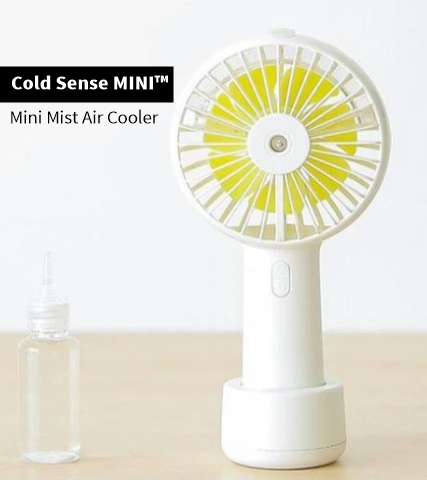
Many water-based personal air coolers use evaporation: air passes through a damp cooling medium, and evaporating water takes heat from the air. This generally works better in dry conditions. As humidity rises, the evaporative cooling effect becomes more limited. These devices add moisture and need the ventilation and maintenance specified by the manufacturer.
A refrigerated air conditioner removes heat from indoor air. Portable models typically discharge that heat outside through an exhaust hose. Many also remove moisture during cooling. Choose capacity appropriate to your room and check drainage and installation instructions.
Read the actual specifications. Words such as “portable”, “mini” or “AC” in a title are not enough to identify the technology.
Step 3: Check what your windows allow
If you are considering a portable air conditioner, check whether its window kit works with your window type and whether you can install the exhaust arrangement as instructed. Allow space for the device, hose and required clearances.
If you rent, check any permissions needed before making alterations. Do not improvise an exhaust setup that contradicts the manufacturer’s instructions.
For an evaporative cooler, check the required ventilation. Do not assume that keeping every window closed is appropriate simply because that arrangement might suit refrigerated air conditioning.
Step 4: Consider comfort beyond temperature
A device also needs to fit your routine. Check noise information if you make video calls or plan to use it near a sleeping area. Read any instructions about overnight or unattended use rather than assuming it is suitable.
Compare power requirements and likely operating time, but keep the cooling task in mind. A lower-power personal device is not necessarily an equivalent alternative to whole-room air conditioning.
Consider the upkeep too: water changes and cooling-medium care for water-based devices, and filters, exhaust arrangements and drainage for portable air conditioners.
Step 5: Reduce heat entering the room
Before adding equipment, close suitable blinds or curtains before direct sunlight warms the space. Move your chair out of a sunbeam and switch off unnecessary heat-producing equipment.
Ventilate when outdoor air is cooler and conditions are suitable, considering air quality and security. Follow the instructions for your cooling device, rather than applying the same window routine to every technology.
A quick decision guide for Sydney homes
- For nearby airflow without adding moisture, consider a fan.
- For personal evaporative cooling, check actual humidity, ventilation and the model’s intended use. Do not assume whole-room temperature control.
- For lowering room temperature, consider suitably sized refrigerated air conditioning and verify installation requirements.
- If you cannot meet a device’s placement or exhaust requirements, choose a different option rather than compromising its setup.
Choose for your home, not just your postcode
Sydney’s historical climate provides context, but your room and your goal should drive the choice. Start with the cooling task, confirm the technology and check whether you can use and maintain it correctly.
During extreme heat, follow local weather warnings and public-health advice. Personal cooling devices are not a substitute for a heat-safety plan or access to a cooler place.
Explore the Cold Sense range and read each model’s specifications, operating conditions and care instructions before choosing an option for your Sydney home.
Climate source: Bureau of Meteorology: Sydney Observatory Hill monthly climate statistics, station 066062. Consulted 8 October 2026. This closed station’s historical records are not live forecasts; observation periods differ between indicators.