

A home office that feels comfortable in the morning can become a very different space by mid-afternoon. If you work from home in Perth, planning for summer starts with your desk, your windows and the kind of cooling you actually need.
Rather than buying a device first and finding a place for it later, use this guide to build a practical cooling routine around your workspace.
What Perth’s summer climate means for your planning
The Bureau of Meteorology’s Perth Metro station (009225) lists a January mean maximum temperature of 31.4°C and a February mean maximum of 31.7°C in its available temperature record, shown as 1994–2026 in the table consulted on 8 October 2026.
The same station lists January mean relative humidity at 3 pm of 39%, based on a separate 1994–2011 record. That historical afternoon average provides context for considering evaporative cooling, but it does not tell you the humidity inside your office today.
These are outdoor station averages, not a forecast, a guarantee of daily conditions or a prediction of any cooling device’s performance. Check the current weather and the conditions in your room before deciding how to ventilate or cool it.
Start with the afternoon sun
Notice when direct sunlight reaches your desk and windows. If your workspace receives afternoon sun, close suitable blinds or curtains before the room warms up. Where practical, move your desk away from direct sunlight while retaining enough indirect light for work.
External shading may also help limit direct sun reaching windows, but any changes should suit the property and require the appropriate permission if you rent. Don’t block ventilation openings or equipment airflow when rearranging the room.
Use cooler outdoor air thoughtfully
Open windows or doors when outdoor air is cooler than indoors and conditions are suitable. If it is hotter outside, opening a window may bring additional heat into your workspace.
A breeze is not a reason to ignore temperature or air quality. Consider smoke, dust, security and any local warnings. Follow your cooling equipment’s ventilation instructions: an evaporative cooler and a refrigerated air conditioner do not necessarily require the same setup.
Choose between desk comfort and room cooling
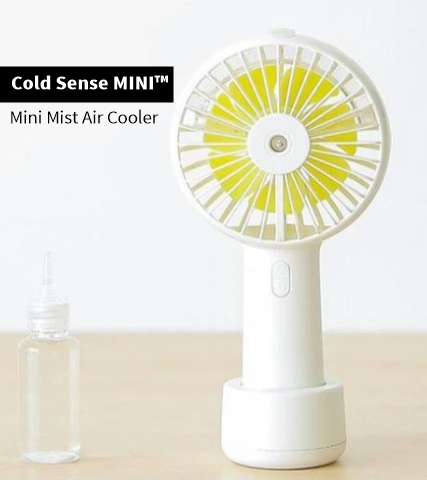
If your main goal is comfort while sitting at a desk, compare devices designed for nearby use. A fan provides airflow without refrigerating the room. Many water-based personal coolers use evaporation, which generally works better in dry air than in humid air.
Perth Metro’s historical humidity figures do not make every Perth room suitable for an evaporative cooler. Indoor moisture, ventilation and changing daily conditions still matter. Water-based devices add moisture to the air and should be used according to their instructions.
For lowering the temperature throughout an enclosed office, consider refrigerated air conditioning with capacity appropriate to the space. Portable air conditioners typically require an exhaust hose vented outdoors, so check window compatibility and installation requirements before buying.
Make space for safe placement
Measure the available space before choosing a device. Leave the clearance specified by the manufacturer, keep air inlets and outlets unobstructed and route cords away from walkways.
Keep water-based devices on an appropriate stable surface away from laptops, power boards and other electrical equipment. Check their recommended distance from you and follow instructions for tank cleaning, water changes and maintenance.
For a portable air conditioner, allow room for the exhaust arrangement and any required drainage. A device’s small footprint does not remove those installation needs.
Reduce heat from your work setup
Switch off spare monitors, printers and other equipment when they are not needed. Keep your laptop on a firm surface with its vents clear, rather than on soft furnishings.
If your work schedule allows, plan demanding tasks for the part of the day when your office is more comfortable. Take breaks away from the desk and keep drinking water within reach. These habits complement cooling equipment; they do not replace heat-safety precautions.
Your Perth home office buying checklist
- Do you need airflow near your chair or a lower temperature throughout the room?
- What are the actual temperature and humidity in your workspace?
- Can you meet the device’s ventilation, clearance and installation requirements?
- Are the noise information, power requirements and maintenance instructions suitable for your workday?
- For air conditioning, is the stated cooling capacity appropriate to the room?
Read the specifications rather than relying on labels such as “mini” or “AC”. A personal evaporative cooler should not be assumed to perform like a refrigerated air conditioner.
Plan for more than everyday comfort
During extreme heat, follow local weather warnings and public-health advice. Identify a cooler place you can work from if your office becomes unsafe, and consider what you would do during a power outage. A small personal cooler is not a heat-safety plan.
For everyday summer planning, start with shade and your desk layout, then choose cooling for the job you need done. Explore the Cold Sense range and check each model’s technology, intended use and care instructions before choosing an option for your Perth workspace.
Climate source: Bureau of Meteorology: Perth Metro monthly climate statistics, station 009225. Consulted 8 October 2026. Observation periods differ between indicators; these historical statistics are not live weather forecasts.